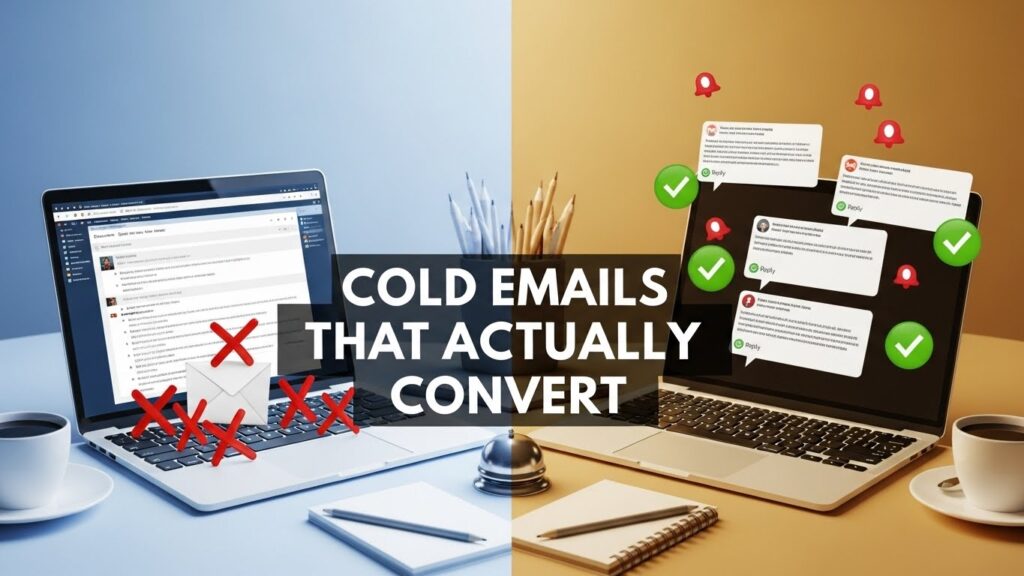
Most real estate cold emails get deleted within three seconds. Harsh reality? Yes. Unavoidable? Absolutely not.
The difference between a cold email that converts and one that gets ignored isn’t luck. It’s strategy, timing, and understanding human psychology. Whether you’re a realtor in the UK building your client base or a USA-based agent looking to crack the B2B real estate market, mastering email prospecting separates top performers from everyone else.
This guide breaks down the exact cold email sequences that generate real responses, book actual appointments, and convert cold prospects into paying clients. No theory. No fluff. Just proven tactics that work in today’s competitive real estate landscape.
Why Traditional Real Estate Outreach Fails
Walk into any realtor’s inbox and you’ll find the same tired approaches:
“Hi [Name], I’m a local real estate agent and I noticed you might be interested in selling your property…”
Delete. Next.
The problem isn’t that cold emailing doesn’t work. The problem is that 95% of realtors use the same lazy formulas that scream “mass email blast” from the first sentence. Your prospects aren’t stupid. They can smell copy-paste desperation a mile away.
The Three Fatal Mistakes
Talking About Yourself First: Nobody cares that you’ve been in real estate for 15 years or that you’re a “top producer.” Your prospect is thinking about one thing: What’s in this for me?
Asking for Too Much Too Soon: Your first email shouldn’t ask them to list their property, schedule a 30-minute call, or commit to anything significant. You’re still a stranger. Build the relationship first.
Generic Value Propositions: “I provide excellent service” means nothing. Every realtor claims this. Show specific, measurable value that relates directly to their situation.
The Psychology Behind Emails That Convert
Before we get into specific templates and sequences, you need to understand why certain approaches work while others bomb. Real estate email prospecting isn’t about clever wordplay. It’s about human behavior.
Principle 1: Pattern Interruption
Your prospect receives 50-100 emails daily. Most follow predictable patterns. Subject lines that break expectations get opened. First sentences that surprise get read.
Standard Subject: “Real Estate Opportunity in [Location]”
Pattern Interrupt: “Quick question about 123 Main Street”
The second one triggers curiosity. What about the property? Is there a problem? An opportunity? The prospect opens to find out.
Principle 2: Reciprocity and Value First
Give before you ask. Share market data they didn’t have. Point out a zoning change affecting their property. Offer genuine insight with zero strings attached.
When you provide unexpected value in your first contact, the psychological principle of reciprocity kicks in. People feel naturally inclined to return the favor, even if it’s just responding to your email.
Principle 3: Specificity Builds Trust
Generic emails feel like scams. Specific details prove you did your homework. Compare these opening lines:
Generic: “I noticed your property in the area and wanted to reach out…”
Specific: “I noticed your 2,400 sq ft property on Birch Lane was purchased in 2018 for £285,000. Given the recent development approval for the shopping center two blocks away, similar properties are now selling for £340,000-£365,000…”
The second approach immediately establishes credibility. You’re not some random agent blasting emails. You’ve done actual research.
Building Your Real Estate Sales Outreach Strategy
Successful email prospecting for real estate agents requires systematic planning. Random, sporadic outreach produces random, sporadic results. Here’s how to build a conversion machine:
Step 1: Define Your Ideal Prospect Profile
Not every property owner is worth pursuing with the same intensity. Create tiers based on conversion probability:
Tier 1 Prospects (Highest Priority):
- Property owners who bought 5-7 years ago (likely built equity, considering next move)
- Out-of-state landlords managing rental properties remotely
- Properties in neighborhoods seeing rapid appreciation or development
- Pre-foreclosure or tax lien situations
Tier 2 Prospects (Medium Priority):
- Owners of older properties needing significant updates
- Empty nesters in large family homes
- Properties listed FSBO (For Sale By Owner) in past 12 months but didn’t sell
Tier 3 Prospects (Lower Priority):
- Recent buyers (purchased within last 2 years)
- Well-maintained properties with long-term stable ownership
- Properties in stagnant markets with minimal activity
Step 2: Research and Personalization at Scale
Yes, research takes time. But personalized emails convert at 5-8x the rate of generic blasts. The math works in your favor.
For each prospect, spend 3-5 minutes gathering:
- Purchase date and price (public records)
- Current estimated value (Zillow, Rightmove, local MLS data)
- Recent neighborhood sales or developments
- Any online presence (LinkedIn, business websites if applicable)
- Property characteristics that make it unique or valuable
This information becomes the foundation for genuine, relevant outreach that doesn’t feel like a template.
Step 3: Map Your Email Sequence Journey
One email rarely closes deals. You need a sequence that builds relationship and trust over time. The ideal real estate lead generation email sequence follows this structure:
Email 1 (Day 0): Value delivery with no ask
Email 2 (Day 3): Additional insight or resource
Email 3 (Day 7): Soft introduction of your services with case study or result
Email 4 (Day 12): Direct but low-commitment ask (15-minute call, market analysis)
Email 5 (Day 18): Final value touch or breakup email
Real Estate Cold Email Templates That Convert

Now for what you’ve been waiting for: actual templates. But remember, these work because they follow the principles we discussed. Don’t just copy and paste. Adapt them to your market, voice, and prospects.
Template Sequence 1: The Neighborhood Expert Approach
Best for: Residential property owners in appreciating neighborhoods
Email 1: Value Bomb
Subject: Birch Lane property values – unexpected update
Hi [Name],
I was pulling comps for Birch Lane this morning and something caught my attention about your property at [address].
Three similar properties on your street sold in the past 45 days for £42,000-£58,000 above asking. The common factor? All had updated kitchens and were listed by owners who’d owned 5+ years.
I put together a quick breakdown of what’s driving these prices. No strings attached, just thought you might find it interesting given you bought in 2018.
[Link to simple market report PDF]
Worth a look if you’re even remotely curious about current market dynamics.
[Your Name]
Why this works: Specific data, relevant timing, zero pressure, genuine value.
Email 2: Additional Context (Day 3)
Subject: Re: Birch Lane property values – unexpected update
[Name],
Quick follow-up to the market report I sent over.
Something else happening on Birch Lane that’s not widely publicized yet: the old industrial site three blocks south got planning approval for mixed-use residential. 147 units scheduled for groundbreaking in Q2.
Based on 15 years watching this market, new development within half a mile typically drives 8-12% value increases for established properties in the first 18 months. Happened on Oak Street in 2019, Cherry Avenue in 2021.
Just keeping you informed. No need to reply unless you have questions.
[Your Name]
Why this works: Continues value delivery, introduces expertise through historical pattern recognition, maintains no-pressure positioning.
Email 3: Soft Introduction (Day 7)
Subject: How the Johnsons got £48K over asking on Maple Drive
[Name],
Remember those higher-than-expected sales I mentioned on Birch Lane?
I worked with the Johnsons on Maple Drive (similar size, similar area to yours) last September. They weren’t planning to sell, but after showing them updated comps and the development pipeline, they decided to test the market.
Listed at £315,000. Sold for £363,000 in 19 days. Three competing offers.
The difference? We timed it right (caught the development announcement), positioned it correctly (emphasized location proximity to new amenities), and priced it strategically (slightly under market to create urgency).
Not saying you should sell. But if you’re curious what your property could realistically bring in today’s market, I’m happy to run a detailed analysis. Takes me about 20 minutes. Zero obligation, obviously.
Let me know.
[Your Name]
Why this works: Social proof with specific results, logical progression from information to action, low-commitment ask.
Template Sequence 2: The B2B Real Estate Outreach
Best for: Reaching investors, property management companies, or commercial prospects
Email 1: The Insight Approach
Subject: Your portfolio in [Area] – data point you should see
[Name],
I track investment property performance across [Region] and noticed your holdings at [addresses].
Something happening in your submarket that might affect your hold/sell decisions: rental rates jumped 14% year-over-year while cap rates compressed to 4.8%. That spread usually signals a sell window for medium-term holders.
I put together a quick snapshot comparing your properties to recent sales of similar assets. Thought you might find the IRR calculations interesting.
[Link to analysis]
No pitch. Just thought you’d want to see the numbers.
[Your Name]
Why this works: Demonstrates market knowledge, speaks investor language (cap rates, IRR), provides actionable data.
Template Sequence 3: The Expired Listing Recovery
Best for: Properties that failed to sell with previous agents
Email 1: The Honest Diagnostic
Subject: Why [Address] didn’t sell – honest assessment
[Name],
I noticed your property at [address] expired after 127 days on market.
I pulled the listing history and photos. Going to be straight with you: your previous agent made three critical mistakes.
- Overpriced by £28,000 based on actual sold comps, not inflated estimates
- Poor photo quality made the space feel smaller and darker than it is
- Listing description buried the best feature (proximity to new transit station)
None of these are unfixable. I’ve sold 6 properties on your street in the past 18 months. Average days on market: 23. Average sale price to list price ratio: 98.4%.
If you’re open to it, I’d like to show you what a corrected approach looks like. 15-minute call, no pressure to commit to anything.
Your property deserves better results.
[Your Name]
Why this works: Acknowledges failure honestly, provides specific diagnosis, demonstrates track record, offers solution.
Mastering Follow-Up Without Being Annoying
Most real estate deals happen between the 5th and 12th touchpoint. Yet most realtors give up after two emails. The secret isn’t persistence for persistence’s sake. It’s providing continued value that justifies the follow-up.
The 6-Month Nurture Plan
Not everyone’s ready to sell today. Some prospects need 6-18 months of gentle nurturing before they’re ready to act. Here’s how to stay top-of-mind without becoming spam:
Month 1: Initial sequence (emails 1-3) as shown above
Month 2: Market update with neighborhood-specific data
Month 3: Case study of recent success in their area
Month 4: Seasonal market insights (how spring/summer/fall affects their property type)
Month 5: Interest rate or policy changes affecting property values
Month 6: Check-in with updated property valuation
Each touchpoint provides genuine value. Each one reminds them you exist. Each one builds trust incrementally.
The Breakup Email That Converts
If someone hasn’t responded after 4-5 emails, send this:
Subject: Closing your file
[Name],
I’ve sent a few emails about [property/neighborhood] over the past few weeks. Haven’t heard back, which tells me one of two things:
- You’re not interested (totally fine)
- Timing isn’t right (also totally fine)
Either way, I’ll stop cluttering your inbox. But before I close your file:
If there’s ANY question about your property value, market timing, or local real estate you’ve been wondering about, hit reply. I’ll answer it with zero sales pitch attached. Consider it a parting gift.
Otherwise, best of luck with the property.
[Your Name]
P.S. – If circumstances change in 6 months or a year, my contact info is below. No hard feelings if you work with someone else. Just want you to get the best outcome.
This email gets a response about 40% of the time. Why? It removes pressure, shows respect for their time, and makes a final value offer with no strings attached.
Measuring What Matters: Email Outreach Metrics

You can’t improve what you don’t measure. Track these key performance indicators to optimize your realtor outreach strategy:
Open Rate: Industry average is 20-25%. If you’re below 15%, your subject lines need work. Above 35%? You’re doing something right with targeting and personalization.
Response Rate: For cold outreach, 5-10% is solid. For warm leads or past clients, aim for 15-25%. Anything lower suggests your value proposition isn’t compelling enough.
Appointment Setting Rate: 2-4% of total emails sent should result in scheduled calls or meetings. This is the metric that actually matters for business growth.
Email-to-Client Conversion: Of those who respond positively, 20-30% should eventually become clients. If this number is lower, your sales process after the initial contact needs refinement.
Time to Response: Track how long it takes prospects to respond. This data informs optimal sending times and sequence pacing.
A/B Testing Your Way to Better Results
Never stop testing. Small changes create massive conversion rate improvements:
- Subject line variations: Test questions vs. statements, curiosity vs. benefit-driven, short vs. medium length
- Email length: Try 75-word emails vs. 150-word emails vs. 250-word emails
- Call-to-action clarity: “Reply if interested” vs. “Click here to schedule” vs. “What questions do you have?”
- Sending time: Tuesday morning vs. Thursday afternoon vs. Sunday evening
- Personalization depth: Basic name only vs. property details vs. neighborhood insights vs. life circumstances
Common Cold Email Mistakes Killing Your Conversion Rates
Even experienced realtors make these critical errors:
Mistake 1: Leading with Your Credentials
Nobody cares that you won Realtor of the Year or sold 47 homes last quarter. They care about what you can do for THEM. Save the credentials for later in the relationship when they actually matter.
Mistake 2: Weak or Vague Subject Lines
“Real Estate Opportunity” tells them nothing. “Your property on Oak Street – market update” tells them exactly why they should open. Specific beats vague every single time.
Mistake 3: Too Many Asks in One Email
Each email should have ONE clear purpose. Don’t ask them to schedule a call AND download your market report AND fill out a form. Pick one. Make it easy to say yes.
Mistake 4: Ignoring Mobile Formatting
70% of emails get opened on mobile devices. Long paragraphs and complex formatting look terrible on phones. Keep paragraphs short (2-3 sentences max), use plenty of white space, avoid complicated designs.
Mistake 5: No Clear Next Step
If they’re interested after reading your email, what should they do? “Let me know if you’re interested” is weak. “Reply with your availability Tuesday or Wednesday and I’ll send over the full analysis” gives clear direction.
Building Your Real Estate Sales Funnel with Email
Email outreach isn’t a standalone tactic. It’s part of a complete sales funnel that moves prospects from cold to closed. Here’s how the pieces fit together:
Stage 1: Awareness (Emails 1-2)
Goal: Get on their radar with value, no pressure. They should think “This person seems knowledgeable and helpful.”
Content focus: Market data, neighborhood insights, trends affecting their property
Call-to-action: None, or very soft (“Let me know if you have questions”)
Stage 2: Interest (Emails 3-4)
Goal: Demonstrate expertise and results. They should think “This person gets results for people like me.”
Content focus: Case studies, success stories, specific methodologies
Call-to-action: Low-commitment offers (free market analysis, 15-minute consultation)
Stage 3: Consideration (Emails 5-6)
Goal: Remove objections and create urgency. They should think “I should probably take action soon.”
Content focus: Market timing, opportunity costs of waiting, specific next steps
Call-to-action: Direct asks (schedule listing appointment, meet to discuss strategy)
Stage 4: Decision (Post-Email Engagement)
Once they respond positively, the email sequence transitions to phone calls, meetings, and closing the deal. Email brought them to the table. Your personal skills close them.
How Aurora Nexus Amplifies Your Sales Outreach

Everything in this guide works. But executing it consistently while managing listings, showings, clients, and closings? That’s where most realtors struggle.
This is exactly why Aurora Nexus exists. Our specialized virtual assistants handle the research, personalization, and execution of your email prospecting campaigns while you focus on what you do best: building relationships and closing deals.
What Aurora Nexus VAs Do for Your Outreach
Prospect Research: They dig through property records, identify high-value targets, gather specific data points that make your emails personal and relevant.
Email Sequence Management: They set up your sequences, track responses, manage follow-ups, ensure no prospect falls through the cracks.
Performance Tracking: They monitor open rates, response rates, conversion metrics. You get weekly reports showing exactly what’s working and what needs adjustment.
Response Management: When prospects reply, your VA handles initial response, qualifies interest level, schedules appointments directly on your calendar.
Content Creation Support: Need market reports, neighborhood analyses, or property valuations for your emails? Your VA compiles the data and creates professional PDFs ready to send.
The Result?
You maintain a consistent outreach operation that actually converts without spending 15 hours per week managing it yourself. Your pipeline stays full. Your calendar stays busy with qualified appointments. Your business grows.
Real estate agents working with Aurora Nexus VAs report 3-4x increases in qualified appointments booked through email outreach within the first 90 days. The campaigns run smoothly. The results speak for themselves.
Your Action Plan for Email Outreach Success
Cold email prospecting isn’t rocket science, but it is systematic science. The realtors winning with email outreach aren’t lucky. They’re strategic, consistent, and data-driven.
Start with these steps:
- Identify 50 high-priority prospects using the tier system outlined earlier
- Research each prospect thoroughly (5 minutes per prospect = 4 hours total investment)
- Adapt the templates in this guide to your voice and market
- Send your first sequence to 10 prospects as a test
- Track open rates, responses, and appointments booked
- Refine based on data, then scale to your full list
Or skip the learning curve and implementation headaches entirely. Partner with Aurora Nexus and let our team handle the entire operation while you reap the rewards.
The choice is yours. Either way, stop sending emails that get deleted. Start sending emails that convert.
Ready to Transform Your Real Estate Outreach?
Aurora Nexus specializes in real estate sales outreach that actually works. Our virtual assistants execute proven email sequences, manage your prospect pipeline, and book qualified appointments while you focus on closing deals.
Visit auroranexus.io to schedule your consultation and discover how we can fill your calendar with high-quality prospects. Your competition is already implementing these strategies. Don’t get left behind.