

What if you could add 40 extra hours to your week, without cloning yourself or giving up sleep?
For most real estate agents, the idea sounds impossible. Between chasing leads, managing listings, handling endless paperwork, and answering late-night client calls, the business can swallow every hour you have. But here’s something that you need to know. Those extra hours already exist. You just need the right person to take the load off your plate.
This is exactly where a real estate virtual assistant helps. The difference is in you bring that help on board. Hand over tasks without a plan, and you’ll both end up frustrated. But follow a clear 30-day onboarding roadmap, and you’ll create a partnership that feels effortless and efficient.
This guide will walk you through that exact plan, step by step, to transfigure your VA into the kind of support that drives your business growth.
Why Onboarding Is Important?
Onboarding is the process of introducing your VA to your business, systems, and way of working. It’s all about communication, setting boundaries, and making sure they feel confident.
A strong onboarding process ensures:
- Tasks are done right the first time.
- Less back-and-forth and fewer mistakes.
- Faster results for your business.
- A positive working relationship from the start.
This basically helps them set a roadmap. Without it, they’ll be guessing.
The 30-Day Step-by-Step Plan
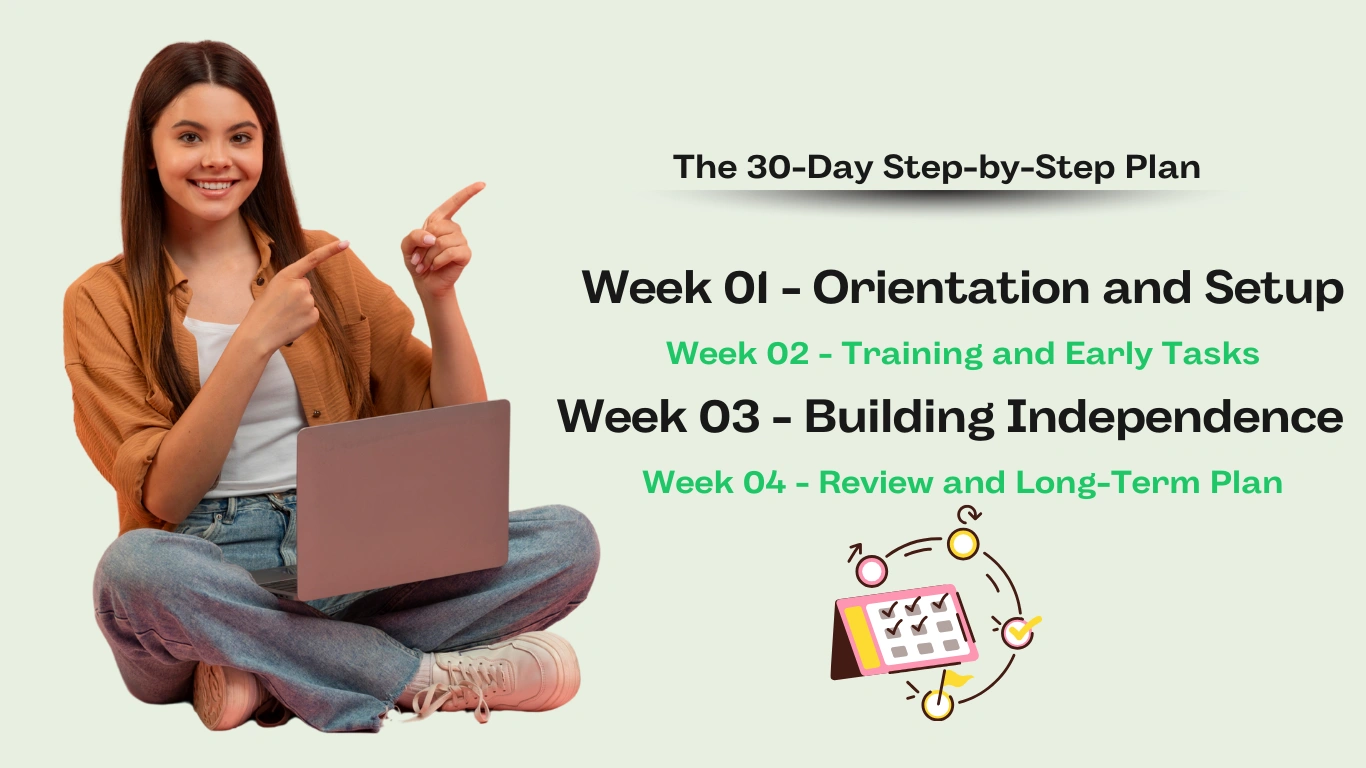
Let’s break the process into 4 simple weekly stages.
Week 01 – Orientation and Setup
-
Welcome and Explain Your Business
Share your story. Tell them how long you’ve been in real estate, what markets you serve, and what your goals are. Give them a big picture view. For example, if you focus on luxury homes or first-time buyers, your VA should know this from the start.
-
Define Roles and Responsibilities
Write down exactly what tasks they’ll handle. This might include:
- Managing your email inbox
- Posting listings on MLS or Zillow
- Following up with leads
- Scheduling appointments
- Creating social media posts
-
Provide Access to Tools
Set up accounts and permissions. Common tools real estate VAs use:
- CRM (like HubSpot or Follow Up Boss)
- Email and Calendar (Google Workspace or Outlook)
- MLS systems (if they are licensed or allowed access)
- Communication (Slack, Zoom, WhatsApp)
-
Start With Light Tasks
Don’t throw everything at them on day one. Begin with small, repeatable tasks, like updating listings or cleaning up your CRM. This gives them confidence and helps you see how they work.
Week 02 – Training and Early Tasks
Now that your VA is set up, it’s time to train and assign real work.
-
Teach Standard Operating Procedures (SOPs)
Write down step-by-step instructions for common tasks. For example: When a new lead comes in, log it in the CRM, send the welcome email template, and notify me.
SOPs save time and make training easier. If you don’t have SOPs yet, record a short Loom video while you do the task, it’s faster than writing.
-
Assign Core Tasks
Start giving them regular responsibilities, such as:
- Managing client database
- Preparing property descriptions
- Sending email campaigns
- Researching property details
-
Hold Check-In Meetings
Schedule short daily or every-other-day check-ins. This keeps communication open. Encourage questions. A simple 15-minute Zoom call works wonders.
-
Track Progress
Use a project management tool like Trello, Asana, or ClickUp to track tasks. This keeps things organized and avoids confusion.
Also Read: Target Local Buyers with Virtual Assistant Managed Real Estate SEO
Week 03 – Building Independence
By the third week, your VA should start working more independently.
-
Assign More Responsibilities
Expand their tasks. For example:
- Have them handle first-level client inquiries.
- Let them manage your social media calendar.
- Ask them to create reports on leads and conversions.
-
Set Clear KPIs
Define what success looks like. Examples:
- Respond to leads within 2 hours.
- Update CRM daily with new contacts.
- Post 3 times per week on social media.
-
Encourage Problem-Solving
Instead of always telling them what to do, encourage them to suggest solutions. For example, if they see leads dropping off after a week, they might suggest an automated follow-up email.
-
Check Workflow Efficiency
Ask yourself. Are tasks moving faster now? Do you have more free time to focus on closing deals and meeting clients? If yes, the onboarding is working.
Week 04 – Review and Long-Term Plan
In the final week, you’re setting up for long-term success.
-
Performance Review
Go over what worked well and what needs improvement. Be honest but supportive. If they struggled with a task, explain clearly and give more training.
-
Adjust Roles If Needed
You may realize your VA is great at social media but slower with data entry. Adjust their role to highlight strengths.
-
Plan for the Next 90 Days
After onboarding, think bigger. Ask:
- What new tasks can I delegate?
- Can my VA take on marketing campaigns, cold calling, or transaction coordination?
- How can I make them part of my growth strategy?
-
Celebrate Wins
Recognize their effort. A simple thank-you email or bonus for a job well done goes a long way. It builds loyalty and keeps motivation high.

Common Mistakes to Avoid
- No clear communication. Don’t assume your VA knows what you want. Be specific.
- Overloading too soon. Start small, then scale up.
- Skipping training. Even if they’ve worked with realtors before, every business is different.
- Not setting boundaries. Decide working hours, response times, and preferred communication channels early.
Tools That Make Onboarding Easier
- Loom for Video Walkthroughs
- Trello for Task Tracking
- HubSpot CRM for managing leads
- ClickUp for smooth workflow
- Zoom for video meetings and screensharing
- Calendly for easy scheduling and appointment booking
The Final Words to Onboard a Real Estate Virtual Assistant
Onboarding a real estate virtual assistant doesn’t have to be hard. With a 30-day plan, you can go from day one introductions to having a reliable partner who helps you save time and grow your business.
By the end of 30 days, you’ll not only have support, you’ll have more freedom to focus on closing deals and serving clients.
If you’re feeling overwhelmed with tasks, now is the right time to bring in a VA. A smart onboarding process ensures they’ll become a long-term asset to your real estate business.
Great information!